San Antonio, TEXAS — The University of Texas Health Science Center San Antonio (UT Health San Antonio) and its partners are offering free continuing education for Community Health Workers. To register, see below or click here.
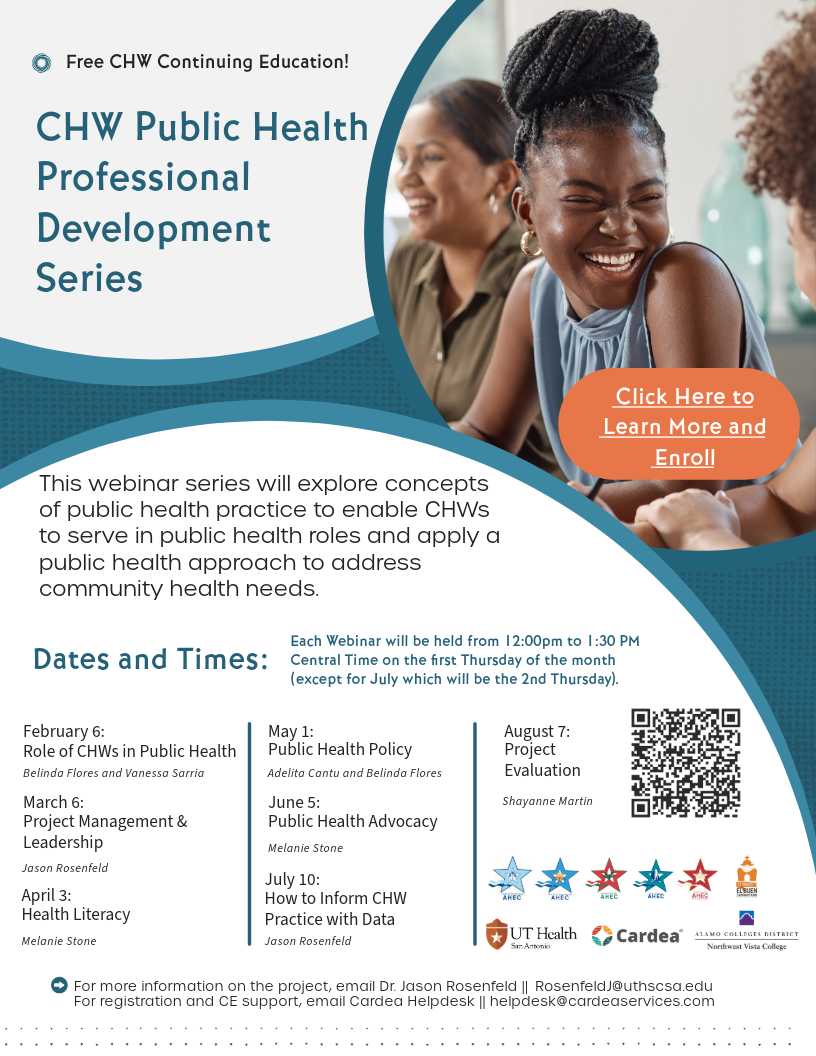

San Antonio, TEXAS — The University of Texas Health Science Center San Antonio (UT Health San Antonio) and its partners are offering free continuing education for Community Health Workers. To register, see below or click here.
San Antonio, Texas — Health Confianza’s Community Health Club program has been running in Bexar County for a little more than three years. We surveyed our club members to gain insights into the impact this peer-to-peer learning model is having in our communities. See below.
 *Infographic by Health Confianza Project Manager Mia Vento.
At our Community Health Clubs, facilitators take relatable problems like high food costs, and turn them into an opportunity to share ideas and resources.
That’s exactly what Marissa Gutierrez, a Community Health Club facilitator who works for the city of San Antonio’s Healthy Neighborhoods program, did for her club, called The Untouchables. She wanted her club members to know that spending a few minutes a week using apps and/or social media can help them save money on their next trip to the grocery store.
Many popular retailers use apps, digital coupons or online specials to attract shoppers. Shoppers who are not using the apps, may be missing out on additional savings.
In this era of high grocery costs, it pays to take advantage of digital deals, along with free food resources in the community.
Here is a modified version of Gutierrez’ club presentation:
*Health Confianza does not endorse specific retailers or vendors.
San Antonio, TEXAS — During the 15th annual Mayor’s Fitness Council Breakfast on Dec. 11, the council honored Jason Rosenfeld with its 2024 Spirit of Service Award and Health Confianza with its 2024 Healthy Champion Award.
The Mayor’s Fitness Council (MFC) is a community-wide collaborative to reduce obesity in San Antonio. The mission of the MFC is to increase awareness and connect San Antonio residents to opportunities for improved emotional well-being, physical activity, and healthy eating.
Jason Rosenfeld, associate professor of medicine at UT Health San Antonio and co-director of Health Confianza, was recognized for a commitment to educating future public health leaders and the innovative health equity initiative titled, Health Confianza.
Rosenfeld and Melanie Stone, assistant professor of Family & Community Medicine and co-director of Health Confianza, established Health Confianza in 2020 to improve the health literacy of health professionals, organizations and community.
About Health Confianza:
Founded in 2021, Health Confianza is a collaborative, multilevel public health initiative aimed at creating a more informed, confident and healthier community. Through health literacy programs designed to help people make health decisions, we are increasing access to and utilization of health information and services. In keeping with its mission, Health Confianza, which is housed at UT Health San Antonio, has engaged with thousands of community members and provided support and training to numerous nonprofit agencies and clinics. In 2024, Health Confianza received the Promising Practice award from the National Association of County and City Health Officials (NACCHO) for its innovative approach and the strides it has made in improving health literacy in underserved, under-resourced communities in Bexar County. To learn how to get involved, visit HealthConfianza.org and WellnessCultura.org.
This article was co-authored and reviewed by Dr. Melanie Stone, DrPH, MEd, CHWI.
San Antonio, Texas — Every health care worker wants their patients and clients to leave an appointment recalling the conversation and knowing what steps to take next.
Unfortunately, that isn’t always the case. For some, an appointment can be an anxiety-filled experience, especially if there are language barriers, or a use of technical words that may make things hard to follow.
But there is a proven approach that can help.
Health literacy experts support the use of Teach Back — an evidence-based method — during conversations between health care workers and clients that can improve recall, understanding and adherence to treatment plans.
The Teach Back method is defined as asking patients, in a non-shaming way, to repeat, in their own words, what they need to know or do. For instance, understanding when and how to take their insulin, or how to properly use an inhaler to control asthma symptoms.
An effective way to learn how to use this strategy is a program called the 5Ts for Teach Back. Health literacy expert Kathryn Anderson and a team at the University of New Mexico Hospitals created the 5Ts method, which breaks Teach Back into five skills that can help health care workers do it well with every patient or client conversation.
The 5Ts are specific, observable steps: Triage, Tools, Take Responsibility, Tell Me, and Try Again.

Health care workers of various roles, from nurses and physicians to pharmacists and community health workers, rely on this method to get important information across to their audiences.
The following definitions of the 5Ts are excerpts from the original academic paper with some entries edited for brevity. Read the academic article for a more in-depth explanation of each step.
There is a growing body of evidence that supports the effectiveness of Teach Back. It is associated with increased knowledge, better adherence to medical regimens, improved patient outcomes like glycemic control, and improved patient safety.
Teach back is also recommended by The Joint Commission, a nonprofit organization that accredits and certifies health care organization and programs in the United States. It is the number one ranked health literacy practice to teach trainees.
Learn more:
4 Tips for Better Health Communication
Organizational Health Literacy Toolkit
Scroll down for six healthy Thanksgiving recipes, from dessert to main and sides and a turkey.
Cinnamon baked pumpkin: servings 10, calories: 106, fat:3g, protein:1g (Dessert)
Recipe found on: https://www.eatingwell.com/recipe/259396/cinnamon-baked-pumpkin/
Diabetes-friendly, low-fat, dairy-free, vegan, low-calorie
Ingredients:
Directions:
Sauteed brussels sprouts with bacon and onions (side)
Recipe found on: https://www.eatingwell.com/recipe/249972/sauteed-brussels-sprouts-with-bacon-onions/
Servings: 10, calories: 77, Protein: 4g
Ingredients:
Directions:
Herb-roasted turkey
Servings: 12, calories: 172, protein: 25g
Ingredients:
Directions:
Roasted sweet potatoes
Recipe found on: https://www.delish.com/cooking/a22639681/how-to-roast-sweet-potatoes/
Ingredients:
Directions:
Green beans recipe
Recipe found on: https://www.eatingwell.com/green-beans-amandine-8732105
Calories: 109, carbs: 12, protein: 3g
Ingredients:
Directions:
Crispy potatoes
Recipe found on: https://thecleaneatingcouple.com/crispy-sheet-pan-roasted-potatoes/
Making oven roasted potatoes is pretty simple. You’ll just need:
You can use coconut oil, grapeseed oil, or avocado oil.
The South Texas Community Health Workers Workforce Preparedness Collaborative (STCWPC), an initiative led by UT Health San Antonio, is celebrating the first community health worker apprentices to graduate from its program in South Texas during National Registered Apprenticeship Week, Nov. 17–23.
Established in 2022 to train community health workers (CHW), STCWPC integrates public health competencies into community health training, and advocates for greater CHW employment. These apprenticeship programs are relatively new in the field, but advocates believe they will help to elevate field growth through standardized professional development.
As part of its registered apprenticeship program, STCWPC provides annual stipends for CHW apprentices and mentors, manages documentation for the registered program, provides technical assistance in the design of apprentice evaluation and on-the-job training activities, and can support employers in finding complimentary funding for apprenticeship training.
Community First Health Plans, which offers health care coverage for individuals and families, recently graduated two employees from its apprenticeship program, leveraging support from STCWPC.
“I am so happy that this CHW apprenticeship program was able to address the workforce needs [Community First Health Plans] identified,” said Jason Rosenfeld, associate professor of medicine at UT Health San Antonio and director of the STCWPC. “Community First provides the example, as the first employer to sign up for our registered apprenticeship program and have their apprentices complete their training, for how other health and social service agencies in the region can develop their own, in-house CHW training programs.”
The collaborative is looking to assist more employers in early 2025. To receive assistance, employers must reach out to STCWPC by mid-February 2025.
If you are a hiring manager or employer who wants to learn more about hiring or upskilling a CHW apprentice, watch the collaborative’s recent webinar “Hire a Community Health Worker Apprentice: We’ll do the Heavy Lifting.”
Watch video: https://www.youtube.com/watch?v=Kr7t3Uwjjhg&t=14s
For more information, contact Shayanne Martin at martins5@uthscsa.edu
SAN ANTONIO, Nov. 6, 2024 – Bexar County awarded The University of Texas Health Science Center at San Antonio (UT Health San Antonio) three grants totaling $9.9 million in federal coronavirus relief bill funding to improve access to health care and create a more equitable and resilient community.
Money from the legislation, known as the American Rescue Plan Act (ARPA), locally will support further recovery from the COVID-19 pandemic in addressing addiction from substance use, behavioral health and long COVID.
Bexar County selected UT Health San Antonio’s Be Well Institute on Substance Use and Related Disorders, a statewide system of substance use and mental health services, for two, two-year grants totaling $7.6 million to support local substance use treatment and peer recovery support services. And Health Confianza, a countywide multilevel health literacy initiative of UT Health San Antonio, will receive a two-year, $2.3 million grant to address long COVID and health literacy challenges.

“This funding is a lifeline for individuals in Bexar County who are struggling with homelessness and substance use disorders,” said Jennifer Sharpe Potter, PhD, MPH, vice president for research at UT Health San Antonio and founding director of its Be Well Institute. “Too many people are unable to get the care they need due to limited access, fragmented care and stigma. With this support and the partnership of local organizations, we can bring compassionate, evidence-based services right to our community, ensuring no one is left behind.”
For Health Confianza, the Bexar County grant comes on the heels of the Promising Practice award from the National Association of County and City Health Officials (NACCHO) for its innovative approach to improving health outcomes in underserved, under-resourced communities in San Antonio. Health Confianza collaborates with organizations, health professionals and the community to reduce health inequities using health literacy strategies. A few of the key benefits of health literacy include improved health outcomes, increased ability to navigate the health care system and lower health care costs.
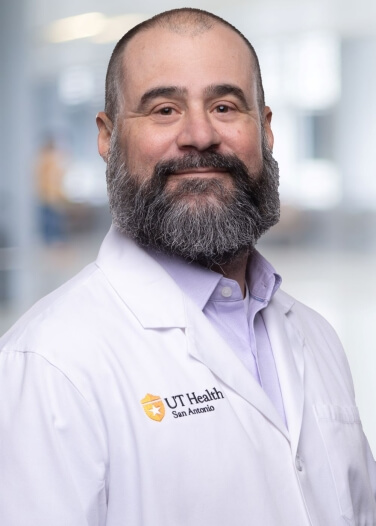
“This grant will enable us to empower community members to take charge of their own physical and mental health through our team of dedicated community health workers, said Jason Rosenfeld, DrPH, MPH, associate professor at UT Health San Antonio and co-director of Health Confianza. “At the same time, Health Confianza’s work will help to increase the efficacy and coordination of services of health and social service agencies in Bexar County. When you improve health literacy, you improve the well-being of people living in Bexar County.”
The effects of the pandemic
Congress passed ARPA in 2021 to address the economic and public health impacts of COVID. More than five years after the start of the pandemic, Americans still are experiencing its broad effects, especially those in vulnerable populations with barriers to health care.
Be Well Institute is using its funding to deliver two critical programs aimed at addressing substance use and recovery support in Bexar County. In collaboration with Corazón San Antonio, Be Well Institute is launching a Mobile Medical Team to meet the urgent need for substance use treatment among individuals experiencing homelessness, led by project director Tara Karns-Wright, PhD, MS.
This initiative combines Be Well Texas’ expertise in addiction care with Corazón’s trusted outreach services, providing in-field care, addiction treatment and comprehensive coordination to enhance access to vital health services for this vulnerable population.
Additionally, the funds will enable the launch of the Bexar County Community Recovery Support Services initiative in collaboration with community partner Unity Recovery, with Potter as project director. This project will establish the county’s first recovery community organization and recovery community center to offer peer-led recovery services for individuals facing substance use and mental health concerns, including those at elevated risk of experiencing an overdose.
Operating seven days a week, the center will provide peer recovery support services to individuals and family members, while also expanding the workforce to increase access to peer support services and improve long-term outcomes across the community.
The pandemic also highlighted the health disparities vulnerable communities face, such as poverty, housing instability and lower health literacy, which lead to higher rates of chronic diseases and worse health outcomes.
With Bexar County’s funding, Health Confianza and its main partners — Southside Collaborative, South Central AHEC (Area Health Education Center), WestCare Foundation and YWCA San Antonio — plan to expand health literacy training and programming into 12 high-priority ZIP codes in Bexar County. In keeping with ARPA goals, Health Confianza will also focus on long COVID, chronic illness, and mental health education and training.
It is estimated that one out of every five people who have COVID can go on to develop long COVID.
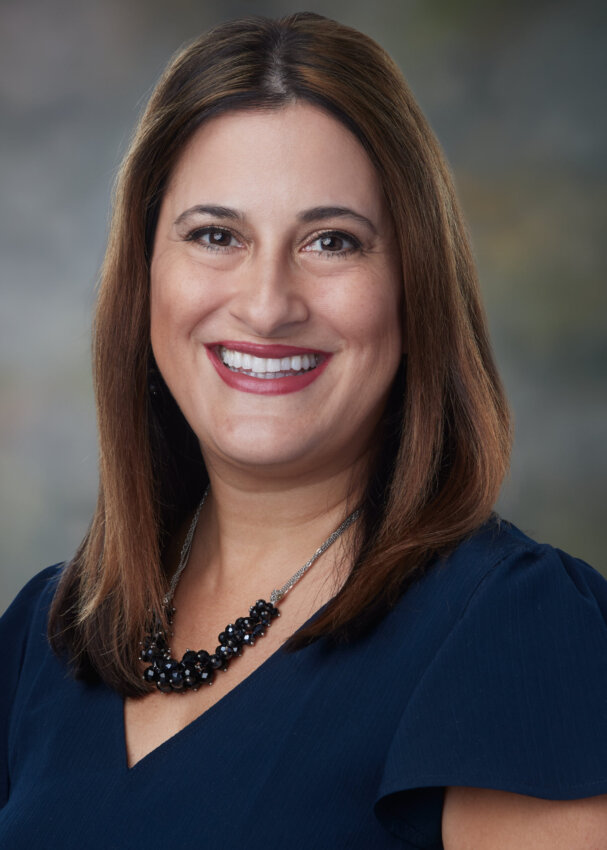
“Long COVID is now a recognized chronic illness, and our understanding of it is growing,” said Melanie Stone, DrPH, MEd, assistant professor of family and community medicine at UT Health San Antonio and co-director of Health Confianza. “Research has shown that it can trigger other issues that our communities already struggle with, such as diabetes and heart issues. By making systemic health literacy improvements, such as equipping organizations to provide better access to long COVID and preventive health education and services, we are helping individuals achieve enhanced well-being for themselves and their families.”
(As of September 30, 2024, Bexar County has chosen to change the source of the funding for the Agreement. The funding for the Agreement will no longer be ARPA SLFRF funds. Rather, as of September 30, 2024, Bexar County has chosen to fund the unspent amount of the Agreement with non-federal funding.)
Courtesy San Antonio Express News
The key to unlocking improved health outcomes in the United States has been in our hands for hundreds of years: community health workers.
Also known as community outreach workers, patient navigators, health educators, community health representatives and promotores de salud, community health workers deliver a variety of health and social services to people where they live, learn, work and play. They are trusted members of their community, sharing a common ethnicity, language, culture and life experiences.
They connect individuals to resources, and improve quality and cultural competency of care. They build individual and community capacity to increase health knowledge, health behaviors and, ultimately, better health outcomes.
More than 60 years of evidence in primary care, maternal health, chronic disease interventions, immunizations, oral health and HIV care proves community health workers play a crucial role in improving the health of our country.
In Texas, there are more than 5,000 certified community health workers, along with many others working without certification. All are on the front lines of health care to serve our most vulnerable populations.
Unfortunately, community health workers remain on the fringes of public health. With less than 3% of U.S. health care expenditures going to public health and disease prevention, these positions are often grant-funded, contributing to a lack of sustainable recruitment, training, professional development and career pathways.
The good news is the U.S. government has significantly invested in building the community health workforce, an interest renewed in part by COVID-19.
In 2022, the Health Resources and Service Administration granted over $225 million to train community health workers. Three San Antonio organizations received $9 million of these funds. We represent one of these programs, a community-academic collaborative led by the University of Texas Health Science Center at San Antonio (UT Health San Antonio). As part of our efforts, we bring together training centers and employers in an apprentice program to elevate the community health workforce in South Texas.
Like apprenticeships for trades and professions such as plumbing and electrical, a community health worker apprenticeship is a structured training program that combines on-the-job learning with classroom instruction.
Through registered apprenticeships, employers can learn how to optimally integrate community health workers into their organization and mold future leaders to meet the needs of the populations they serve.
As a cross-sector workforce, community health workers work beyond inpatient and outpatient health care. They also work in schools, government agencies, faith-based organizations, neighborhood centers, on the street, and in libraries, pharmacies, affordable housing purveyors and other trusted organizations.
These organizations already face a demand among patrons for linkages to health and social services. A community health worker can alleviate these tasks and allow other team members to focus on other responsibilities.
From the standpoint of an employer, there is no better time to train future health professionals through a registered apprenticeship program. The city of San Antonio’s Ready to Work program and Alamo Workforce Solutions have funds to support the salaries of new and current workers in apprenticeship programs. Our community health worker training program also provides technical expertise in designing job descriptions, executing on-the-job training and mentorship.
One of the most influential actions a South Texas employer can take this year is hiring a community health worker to prioritize health and well-being. By pulling community health workers from the fringes and into a formalized apprenticeship pathway, we can strengthen the entire public health ecosystem.
Shayanne Martin is a senior project manager with the Charles E. Cheever Jr. Center for Medical Humanities and Ethics at UT Health San Antonio. Dr. Jason Rosenfeld is an associate professor of medicine at UT Health San Antonio and co-director of Health Confianza.
San Antonio, TEXAS — The National Association of County and City Health Officials (NACCHO) selected Health Confianza and the City of San Antonio Metropolitan Health District (Metro Health) with its Promising Practice Award for their work to improve health literacy in underserved areas in San Antonio.
The award was presented on Thursday, July 25, at a ceremony during the annual NACCHO360 Conference held in Detroit, Michigan. “Each year, we are thrilled to recognize the incredible work of local health departments through our Model and Promising Practice Awards,” said Lori Tremmel Freeman, NACCHO CEO. “This year’s awardees have demonstrated exceptional service in developing programs to address substance use, health inequities, infant and child health, health literacy, immunization, foodborne illnesses, hepatitis, and other pressing health challenges in their regions. This recognition is sure to inspire continued excellence and progress in public health practices across the country.”
Health Confianza began as a partnership between The University of Texas Health Science Center at San Antonio (UT Health San Antonio), Metro Health and The University of Texas at San Antonio with funding from the U.S. Department of Health & Human Services Office of Minority Health. In 2024, Health Confianza transitioned to UT Health San Antonio and is housed at The Charles E. Cheever, Jr. Center for Medical Humanities & Ethics.
“We are honored to be recognized for Health Confianza’s innovative approaches to public health and health equity,” said Jason Rosenfeld, DrPH, MPH, associate professor at UT Health San Antonio and co-director of Health Confianza. “To sustainably address health inequities, we must address health literacy at the community, workforce and organizational levels – it shouldn’t be the sole responsibility of already marginalized communities to change. It’s incumbent upon all of us to design more responsive systems to deliver culturally and linguistically appropriate services and information.”

About 90% of Americans struggle with health literacy challenges, resulting in worse health outcomes, less use of preventive health services, more emergency room visits, fewer cancer screenings and fewer immunizations, and leading to billions of dollars in avoidable health care expenses.
“This U.S. Department of Health and Human Services’ Office of Minority Health grant allowed Metro Health, UT Health San Antonio and partners to launch a health literacy initiative in our community’s under-resourced neighborhoods,” said Metro Health Director and past president of NACCHO Dr. Claude A. Jacob. “These milestones showcase the new ways Metro Health and overall partners have grown and positioned themselves to impact our community’s well-being. I would like to congratulate Drs. Jason Rosenfeld and Melanie Stone (of Health Confianza) for the collaboration, and I am very proud of this national recognition.”
“People with low health literacy may not be able to follow instructions on a prescription label, navigate the jargon on health insurance paperwork or know how to make diet changes to prevent diabetes — one of our community’s biggest health challenges,” said Melanie Stone, DrPH, MEd, an assistant professor of Family and Community medicine at UT Health San Antonio and co-director of Health Confianza. “We know health literacy can improve people’s confidence in their ability to make good health decisions for themselves and their families. We hope this award raises awareness of the importance of health literacy and encourages greater community involvement in our efforts.”
Since its inception three years ago, Health Confianza has been featured by global, national, regional and local entities – including the National Academies of Science, Engineering Medicine and now, NACCHO. As a Promising Practice winner, Health Confianza’s strategic model will be featured in NACCHO’s Model Practices Database for other local health departments to review and replicate.
Additional Information:
Established in 2021 as a response to the COVID-19 pandemic, Health Confianza is a collaborative program that utilizes health literacy principles and strategies to enhance health equity for those individuals living in ZIP codes with the most significant health disparities. The goal is to equip people with skills and access to scientific/accurate health information to make informed health decisions for themselves and their families.
Health Confianza offers an innovative Health Literacy Pledge Program for organizations, a peer-based Community Health Club Program for community members, workforce training, mobile clinics, and accurate and accessible bilingual health communications. All programs are provided at no cost to participants.
In 2022, the City of San Antonio Metro Health’s COVID-19 Community Response and Equity Coalition (CREC) was recognized by NACCHO with an Innovative Practice Gold Award acknowledging the efforts of community partners that included Health Confianza.